
The Steal 005
Heat (1995)

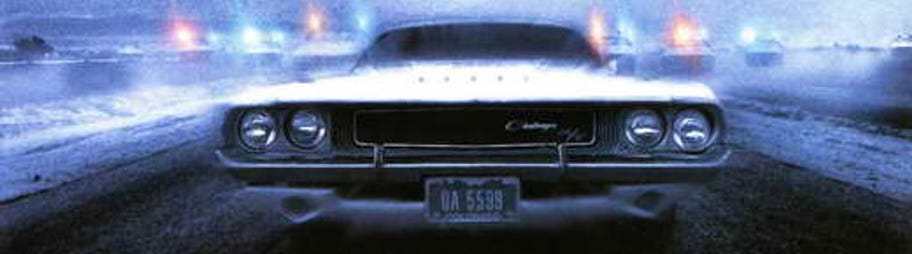
The getaway driver is an oddly ethereal role for something so solid. Integral to the caper, yet detached from it. Treading water while the real business of the robbery goes down out of sight, and then, as soon as the doors open, the focal point shifts as the world falls away and everything becomes about the wheel and the road.
They’re the heartbeat you only notice when it stops. The getaway driver doesn’t crack the vault, wave the gun, or sweet-talk the mark. They wait. Listening to the seconds stretch, engine idling, eyes on the rear-view. When the job goes right, they’re invisible. When it goes wrong, they’re the only thing between a payday and a headline, boat drinks or jail. Or worse.
It’s an fascinating space to occupy. Half inside the job, half outside it. In HEAT (1995) Neil’s driver, Trejo, is a broken, replaceable part - and that doesn’t work out well for anyone. In THE DRIVER (1978) the camera practically lives inside the car, heists little more than fuel. Both Walter Hill’s Ryan O’Neal and Nicolas Winding Refn’s Ryan Gosling share the same non-name; The Driver. It tells us nothing about them. It tells us everything. In these getaway focussed movies the seat is the only place to be. The wheel’s all you need (although Gosling’s pretty handy in an elevator too). These guys multitask when they need to, but their purpose is simple: Get. The. Fuck. Away.
The man behind the wheel isn’t just an accessory to the crime; he’s the echo of it. Detached, disciplined, doomed to keep moving.
The best drivers are ghosts haunting their own machines. They’re not chasing money so much as motion: the hum of tires, the moment between red and green, break or accelerate. Whether it’s McQueen’s cool control or Gosling’s puppy-dog menace, they share the same existential itch. They stay in motion because stopping means examining who they really are.
You know the old line about it not being the destination but the journey? These movies take that to the extreme. There is no start point or end point - the “bank” and the “rendezvous” might as well as be Narnia and Oz.
What’s important, what’s vital is The Car. The Road. The Man.
The Driver.
And for us that’s more than enough.
Welcome to The STEAL. Strap in.
Note: Mike would not shut up this issue so it’s a long one. Maybe too long if this newsletter is truncated in your email. Sorry about that, but we think the movie in question is worth it. You can click on “View entire message” and you’ll be able to view the entire post in your email app or just click into Substack direct. We’ll maybe break one of Mike’s fingers and make the next one a tad shorter.
Sizemore revisits Michael Mann’s HEAT (1995) - the film that redefined the modern heist.
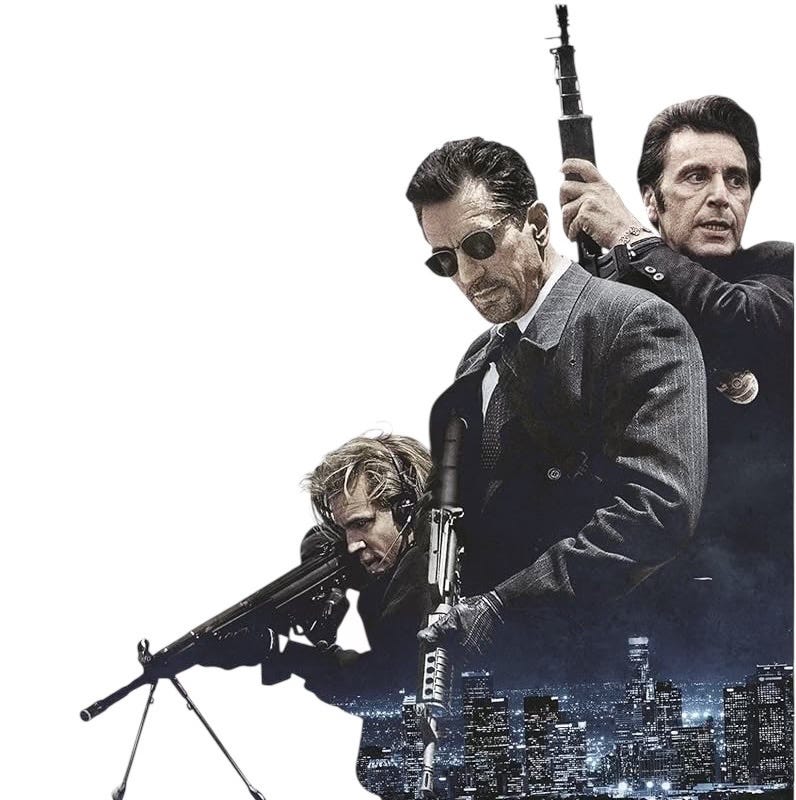
“You know, we are sitting here, you and I, like a couple of regular fellas.”
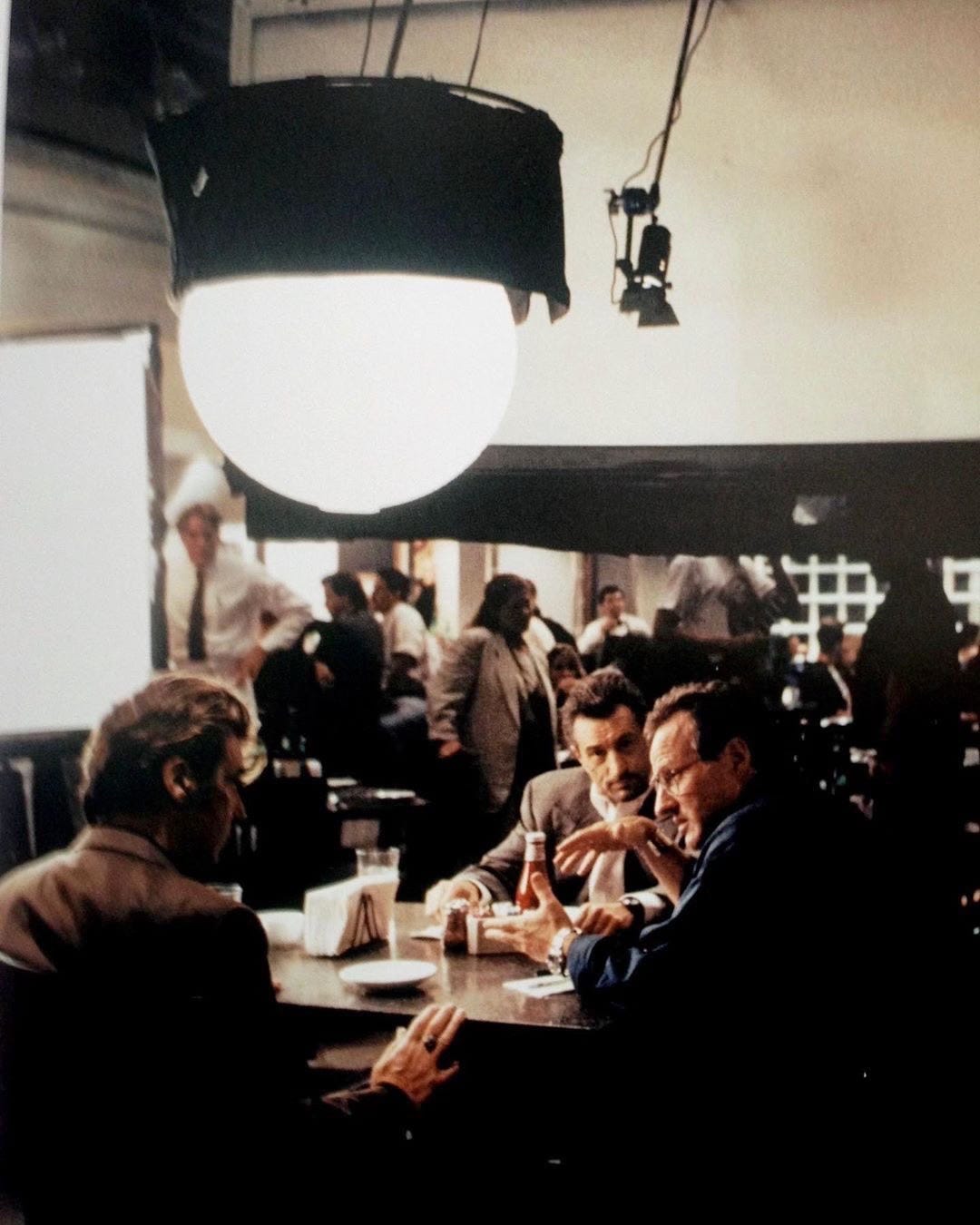
A laugh a minute, that Vincent. Nothing in Michael Mann’s HEAT (1995) is regular. Not the men, not the work they undertake, nor the wreckage they leave behind. Even a simple coffee becomes monumental - one of the most iconic scenes in modern cinema. The weight it carries comes from the calibre of the actors at that table and what it means to finally bring them together. For the movie, it’s a pivotal scene that drops around the halfway mark: everything before was set-up; everything after, execution.
Henning Mankell said, “fighting crime is simply a question of endurance; about which side can outlast the other” and it’s a vital observation relating to HEAT, because this isn’t a story about good guys and bad guys, it’s about professionals. Neil McCauley and Vincent Hanna, two protagonists, both right on the edge, both running out of time.
Because HEAT isn’t a movie about crime at all. It’s a movie about work.
And firing high-velocity assault rifles across crowded LA streets.
Fuck, it’s good.
Mann wrote the initial story back in 1979, predating even THIEF (1981) and it is, sort-of, based on a true story - or at least real-life characters. His Chicago cop pal, Chuck Adamson, was pursuing a guy in the 60s who always seemed one step ahead of him: Neil McCauley. Mann recalls:
“They simply bumped into one another. Chuck didn’t know what to do: arrest him, shoot him or have a cup of coffee.”
That seed became the most famous sit-down in cinema. HEAT itself influenced a real LA bank heist in ’98. The thieves even delayed for three days to source screen-accurate holdalls. HEAT truly is as good as it gets so it shouldn’t come as a surprise that Mann returns to these guys in his pre/sequel novel HEAT 2.
Competence porn, a term coined by our friend John Rogers, describes a narrative built around the pleasure of watching highly skilled professionals do their jobs with mastery, precision, and style. A good heist movie often makes the process as compelling as the outcome. Turns out that watching expertise under pressure is one of our storytelling kinks and HEAT delivers this in spades from the armoured car hit to the surgical bank takedown.
But Neil? He’s already slipping when we meet him.
Even before that, he allows Waingro on board. The toxin that poisons his crew, dooms them all. Mann even offers him a chance to course-correct in the diner parking-lot, but it’s Neil that lets the bastard slip away into the night.
The film uses Neil’s competence, even in decline, to fool us into thinking he’s still at the top of his game. But we’re not watching Danny Ocean here. We’re watching a more subtle version of 1950’s THE ASPHALT JUNGLE’S Doc; the razor-sharp career criminal aging out of the game.
Rewatch the scene when the bank job is floated by Kelso. Concerned, Neil asks him how he got the information.
Mann allows a crack in Neil’s armour as he looks again at Kelso, frowning, unsure about this answer. Kelso represents the future. A master of modern technology, his role is purely digital. He reduces his information back to paper for Neil to access because Neil is old school. Analogue.
The heist genre traditionally fetishises gear, locks, drills; the tactile artistry of crime. HEAT is Mann’s love letter to all that. The more modern criminal element of MIAMI VICE (2006) and COLLATERAL (2004) lead ultimately to BLACK HAT (2015). Even his u-turn back to 1933 shows Dillinger, the original strong-arm bank robber, taken down by a modern system; bureaucracy and the FBI.
When the plans arrive Neil jokes that he could build a bank from them. He and his team probably could. They’re brutally blue collar. Neil’s firsthand research is done in book stores. He eats alone, reading about one singular specific thing, stress fractures in titanium, analogue as fuck.
Neil and his crew are boots-on-the-ground kind of guys. In their world physical effort is rewarded. They’re hands on. Tactile. The board they’re playing on hasn’t changed much over the years, but the game around them is evolving and is about to leave them discarded, broken, and dead.
“Allow nothing to be in your life that you can’t walk out on in 30 seconds flat if you spot heat around the corner.”
Legendary. Also bullshit.
Not just in practice, but philosophically. It’s a line born in captivity. Passed to Neil by an old con serving time. You think that guy stuck to it? Obviously not. Sounds fucking great though. No wonder Neil clings to it like a life-raft. Because as good as he is at what he does, even he recognises it’s not a life he’s living. He’s waiting for that to start. Not here in LA, but “some day”, he says. In Fiji. May as well be a postcard tucked in his rearview.
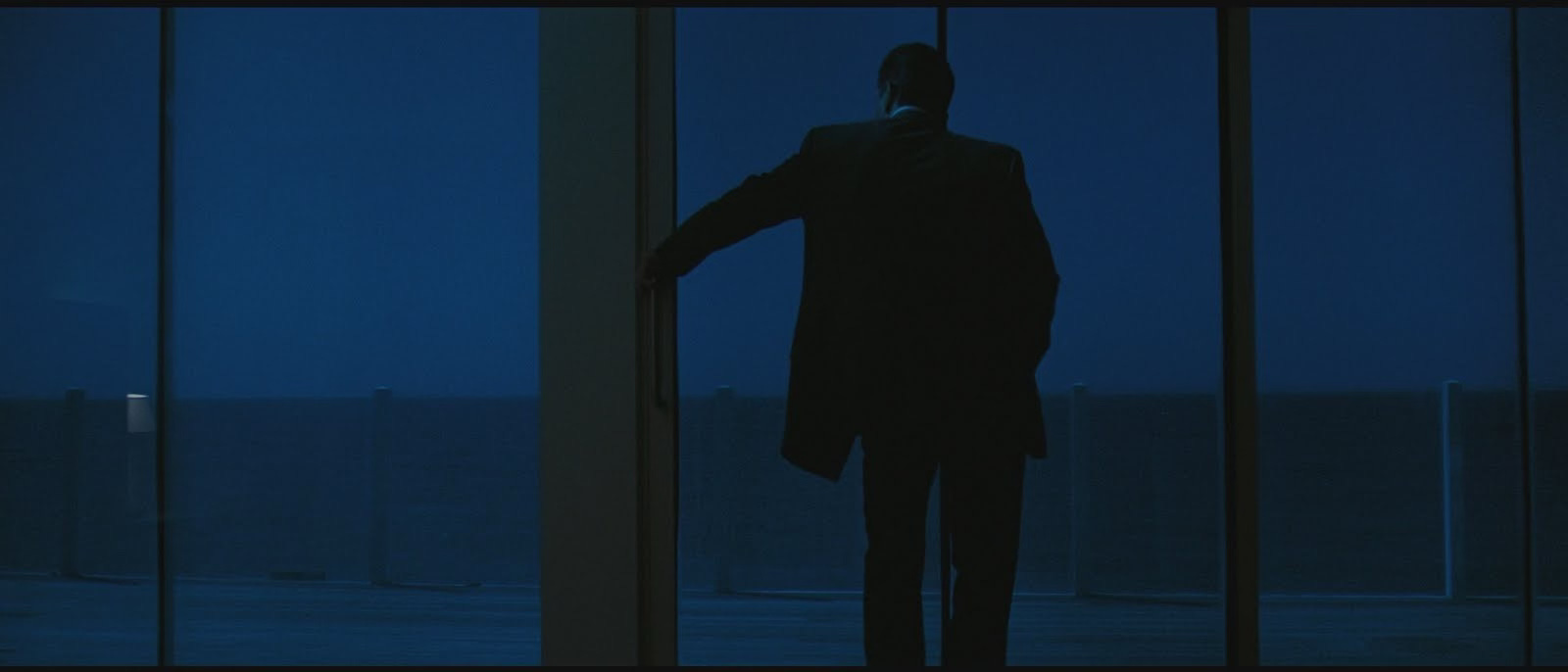
He may tell Edie that he’s alone but not lonely. The truth is actually far worse than that. He’s so far removed from the system, from humanity, that he’s isolated existentially from life.
That isn’t Vincent. He and Neil are often described as two sides of the same coin, but they’re fundamentally different. Two incompatible archetypes doomed by the focus they have on their work to the neglect of everything else around them.
“I do what I do best, I take scores. You do what you do best, try to stop guys like me.”
This is key. Vincent’s job, eternally trying, never ends. Neil’s job does end, but then he’s back to an empty existence in an empty house. He could head to Fiji, but instead he lines up the next score. He has nightmares about running out of time, but the reality is he’s continually pushing happiness ahead of him because, unlike a bank, it’s unattainable.
This all-consuming dedication to the job becomes identity. Diamond focus forged under incredible pressure. One thrives under it; the other begins to break. Both are obsessed with what they do, both determined not to lose. So it’s fitting that an obsessional craftsman like Mann ensures that by the film’s close, they both win.
Wait. Neil wins? Bleeding out on the edge of an airport with only the cop that killed him as witness to his passing? Yep. Huge win. But I’ll get to that.
Curious about one another they recognise something familiar. Neil, wanting to understand Vincent, observes from a distance, tricking the LAPD to walk into his long-lens. When Vincent wants to get to know Neil he takes him for coffee. Intimate. Human. His wife fails to see this.
‘You don’t live with me, you live among the remains of dead people. You sift through the detritus, you read the terrain, you search for signs of passing, for the scent of your prey, and then you hunt them down. That’s the only thing you’re committed to. The rest is the mess you leave as you pass through.’
Sure, Vincent’s life is a train wreck compared to the calm empty aesthetic of Neil’s. The thief has zero attachments while the cop’s life is lousy with them. They’re all broken, but he still tries. His humanity makes him better police, but a lousy husband. If he’s home with his family who is going to hug the mother who just found out her daughter has been murdered? He brings the grieving woman close, holds her. The more he does this, display his humanity, help his fellow man, the more he pushes away Justine and Lauren. And it takes almost the same tragedy to bring them back together.
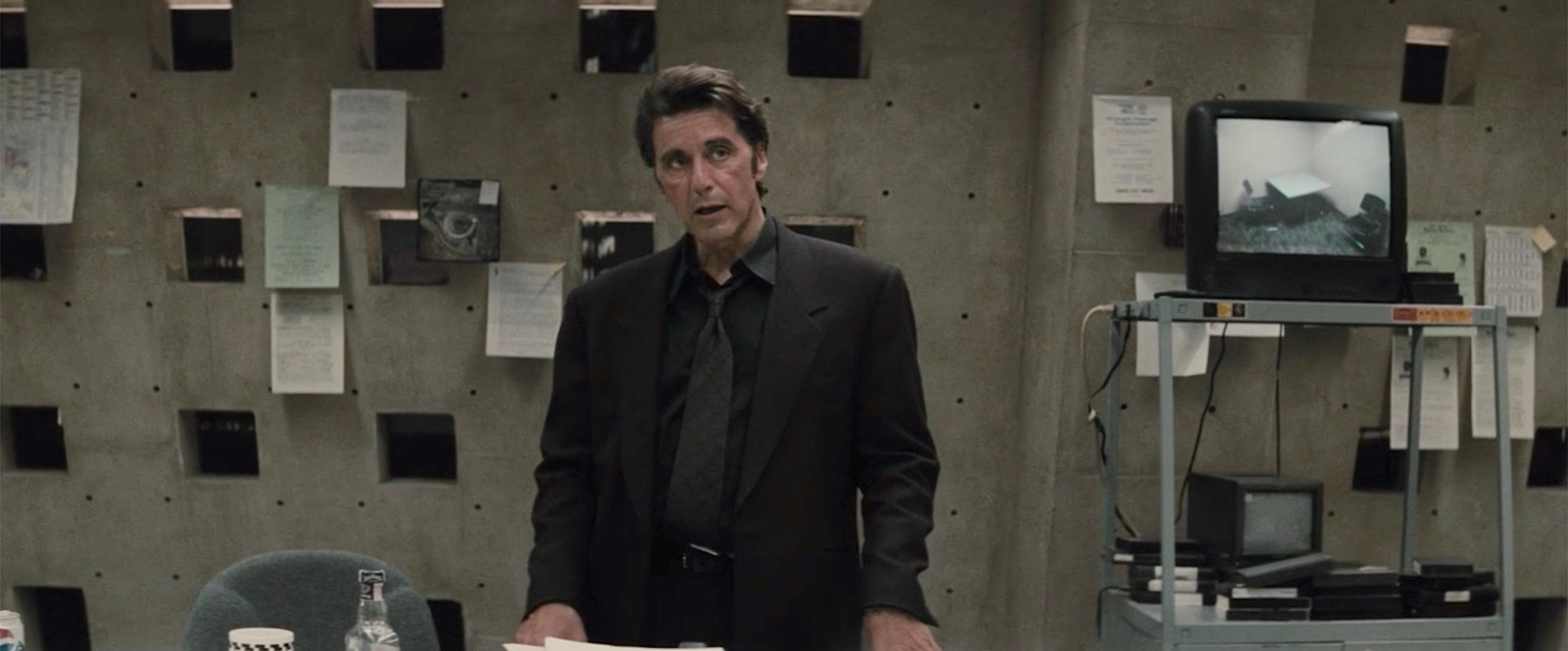
Life is visceral for Vincent. When we first meet him, he’s mid-fuck. When we first meet Neil he’s in character and passing through, living a life almost completely devoid of human contact. It’s what makes the few instances of personal intimacy in the movie so fucking important for him. Edie, of course, but also throwing punches because they’re vital, supporting Chris because he’s the only friend he has, and finally… holding Vincent’s hand.
While we often see Vincent amidst the chaos of life, Neil is more of an observer. When he does try to partake he inadvertently puts himself and his crew on full display to the LAPD. His weakness is not inherent in the work. It’s everything else. Isolated he’s safe, secure. It’s this subconscious longing for normality that brings him to Vincent.
But he’s not stupid. He can fix this. So, even though this is the heat he’s supposed to walk away from, instead he offers his crew a choice: take the bank or split right now.
“Do not go home, do not pack, nothing. 30 seconds flat from now we are gone on our separate ways. That’s it.”
But that’s not it. This is his mantra, not theirs. He knows this. Chris has already confirmed it when Neil points out his wife is weighing him down:
“For me the sun rises and sets with her, man.”
Of course his crew is gonna go after the bank despite the heat. Neil understands this. The question was never a question. He’s asking permission to violate his own code. He knows the police are on him and if he could live by that one single rule, he should already be walking away.
But ‘If you spot heat around the corner take them to the nearest Starbucks’ isn’t much of a line and what would we be discussing here if the movie ended with boat drinks in Fiji?
Peripheral to his focus on Neil, Hanna also has a serial killing to solve. He never has a clue that the murderer is the same man who gave up Neil. He also has no idea that Neil kills the serial murderer that he’s looking for. Yet it’s here that Neil doubles down on breaking the walk-away rule he’s tried to live his life by. In taking revenge, he stops focusing on his work and inadvertently becomes a force for good, briefly aligning himself directly with Hanna.
Who in turn is nothing but focused out there at the edge of the runway.
Neil doesn’t fail at the end. He becomes human once more. Mortal. And his return to life, brief though it may be, is when the barrier that protected him finally falls.
Allowing him to reach out and hold on to another human being for the rest of his life.
And that’s a fucking win.
The Steal’s Poster of the Week
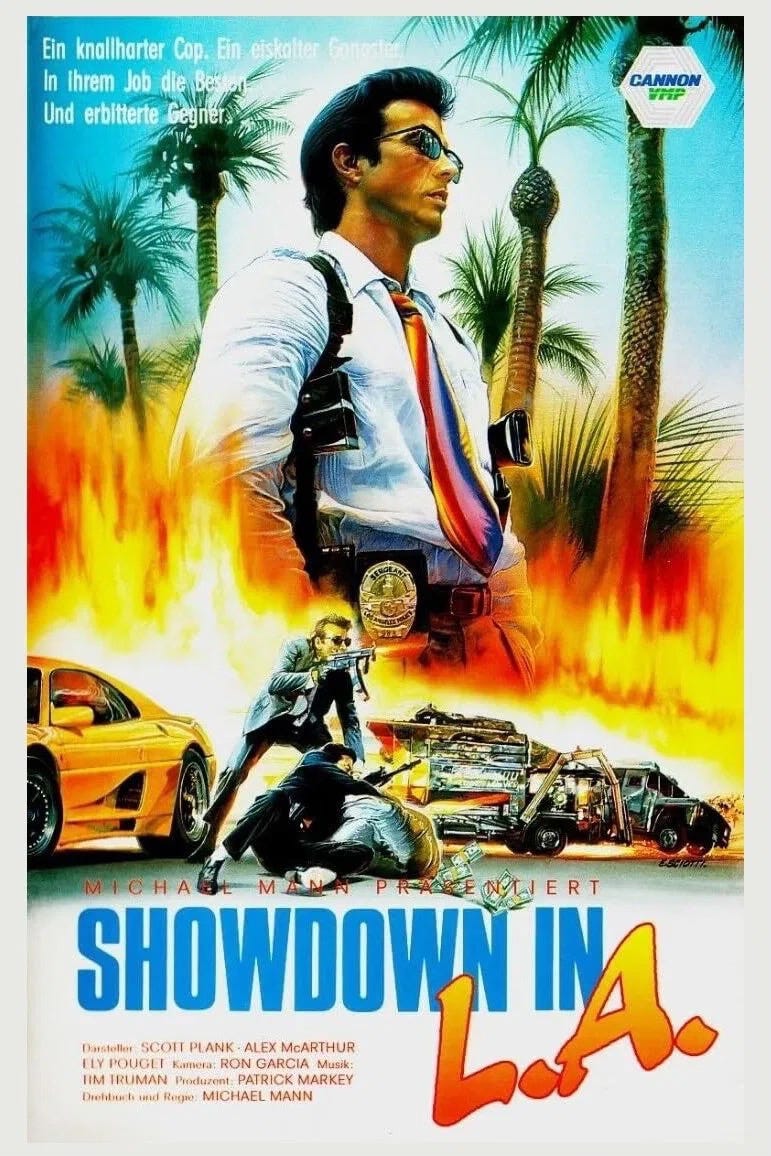
Want us to take a dive on a particular heist movie? Leave us a suggestion or two in the comments and feel free to let use know how we’re doing. We’d love to build THE STEAL around our readership, so come on board and help us course correct as we go.
Heist News
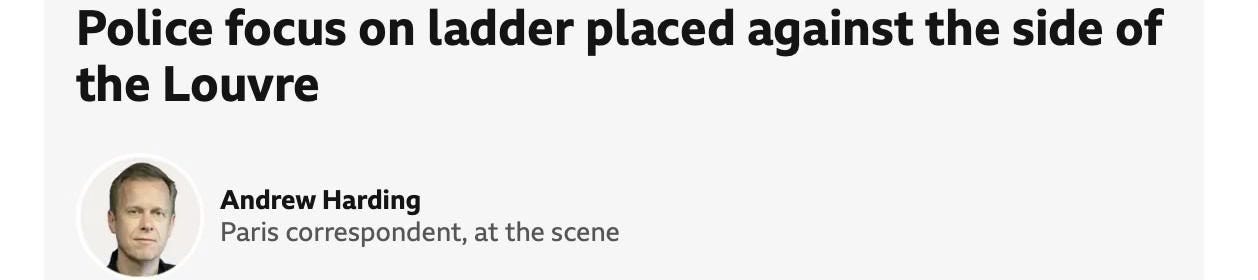
We won’t make a habit of covering real-life heists here at THE STEAL (they tend to lack decent lighting, pacing, or a third act) but the one that hit the Louvre this month is too cinematic to ignore. A second-floor balcony job. Four minutes inside. €88 million in jewels gone. The thieves used a furniture lift to reach the window, slipped through a blind spot in the cameras, and vanished before Paris had its morning coffee and croissant. The loot? Pieces of the old French Crown Jewels. Evidence left behind reads like a checklist from a prop truck: blowtorch, gloves, a blanket, and more than a trace of DNA (which, this week led to the arrest of two men “in their early 30s who have criminal records for jewel theft”).
Our two favourite slices of the chaos so far are this headline: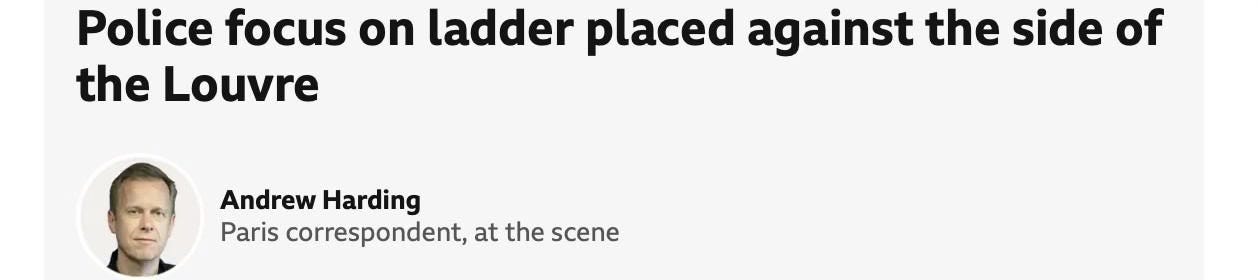
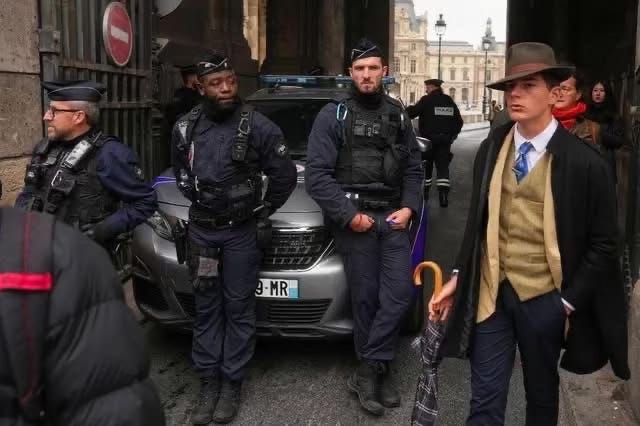
The crew also left a hole behind. Police are looking into it… and, of course, the moment this chap turned up to presumably crack le case wide open:
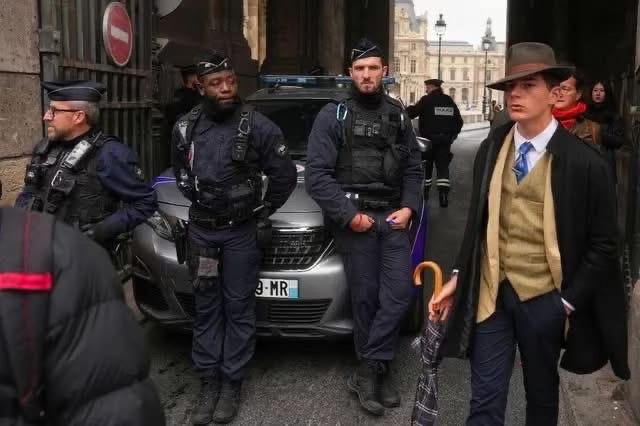
There was some question as to whether the beggar or his minkey was breaking the law…
Kelly Reichardt’s has called her latest film an ‘anti-heist movie’, but that’s still good enough for us. Little White Lies interviewed Reichardt about THE MASTERMIND and why she is “fascinated with people stealing art, and the idea of taking something from a public space to enjoy on your own.”
Next Issue
In two weeks Rob gets his teeth into a 1970s canine-based caper that spawned no less than three sequels.
Thanks for reading. Thanks for subscribing. Thanks for sharing. Once the heat dies down we’ll see you at the prearranged location to split the take. What could possibly go wrong?